
Earlier this year, I attended the conference Marx in the Anthropocene, hosted by IUAV University in Venice, Italy. Keynote speakers included well-known sociologists such as Nancy Fraser, Brett Clark and John Bellamy Foster, who explore planetary concerns through a Marxist perspective. Venice is an appropriate location from which to consider the effects that global capitalism is having on the environment and on the food system. It was a centre for early Italian capitalism and colonialism, and now it is suffering from increasing flooding, partly due to global warming.
As John Bellamy Foster has discussed in a series of publications, Marx was one of the first to consider how capitalism altered previously stable ecological relationships on the planet. Foster focuses in particular on the “rifts” that Marx identified in his writing. These are social but also “metabolic” and have to do with the soil’s ability to consume nutrients and to yield bountiful crops. Before capitalism (before urbanization), the nutrients (food) that were extracted from the soil were returned to the soil because the animals and humans that consumed food and produced fertilizing manure lived close to this soil. But when cities expanded and food was transported away from the fields where it was grown, this did not happen. As a consequence, cities became polluted and unhealthy, and the soil where food was grown was increasingly exhausted.
During the nineteenth century, this caused a well-documented soil nutrition crisis in industrialized European nations. In a desperate attempt to rejuvenate the soil, the battlefields of the Napoleonic wars were dug up so that the bones could be turned into fertilizer and spread across fields. In addition to this, the discovery that guano is extremely nutrient-rich stimulated colonialism in the Pacific and helped build what Immanuel Wallerstein called the capitalist world-system. From this point in time, agriculture (food production) has been dependent on the services this system provides at a profit.
The metabolic rift was also a social and intellectual rift. A point raised by many Marxist ecological thinkers is that the transformation of a collectively worked and owned soil (the commons) into industrialized monocrop plantations alienated people from the soil and thus from the imperative to care for it. While the idea that humans and nature are separated can be traced back to Descartes (see Jason W. Moore), this is the moment when that notion of separation became a lived condition for many people in Europe.
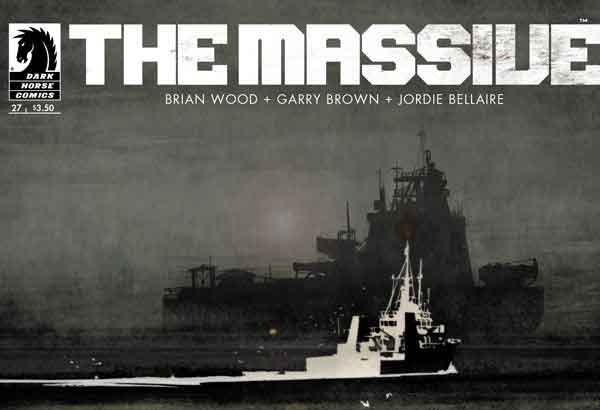
While few authors of climate fiction trace the history of global warming and soil exhaustion back to its seventeenth-century beginnings or its nineteenth-century evolutions, there is a considerable number who are well aware of the rifts theorized by Marx and developed by various Eco-Marxist scholars. One of the most interesting and explicit cases is the graphic novel/series The Massive by writer Brian Wood and artist Kristian Donaldson (Garry Brown after issue 3). The story revolves around a small crew of activists on a ship called (with clear reference to Marx) Kapital. In the near future the series takes place in, ice caps have melted, seas and land have become even more exhausted, and global society has suffered a vast ecological, political and social breakdown called “the Crash”.
Importantly, the creators of The Massive make an effort to account for part of the history that has produced this flooding and exhaustion, and they also depict encounters with the extractive system that drives this historical development. As an example, one of the central characters of the series is Mag Nagendra, born in 1974 in a fishing village in the Bangladesh section of the Bay of Bengal in Bangladesh. Early on in the story, the reader encounters the 10-year-old Mag on the beach of this village. The people of the village are getting violently ill because of chemical waste being dumped into the bay from a ship. (This bay has been a site for chemical dumping for at least 80 years, and this is having a considerable impact on fishing and the local ecosystem.)
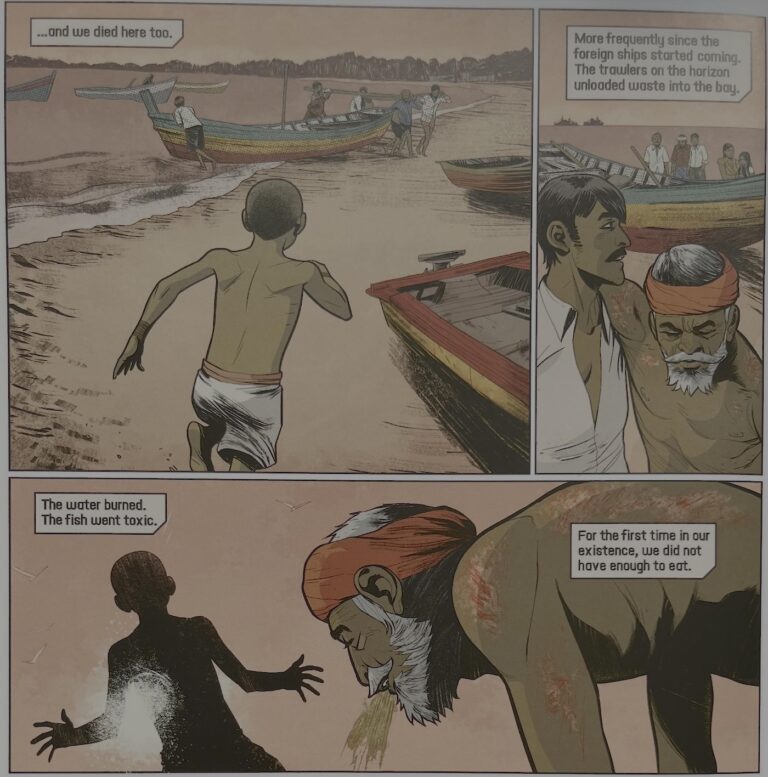
Mag sees his entire life world falling apart, and he swims, knife in hand, to the boat dumping vats of chemical poison into the sea outside the village. He attacks one of the sailors, who beats him and throws him back into the sea. Somehow, he makes it back to the shore, but his way of life is essentially over. When Mag’s family is unable to subsist on the fish they source from the sea, they are folded into the existing wage economy. They must now earn money so that they can buy “processed food in the new markets”.
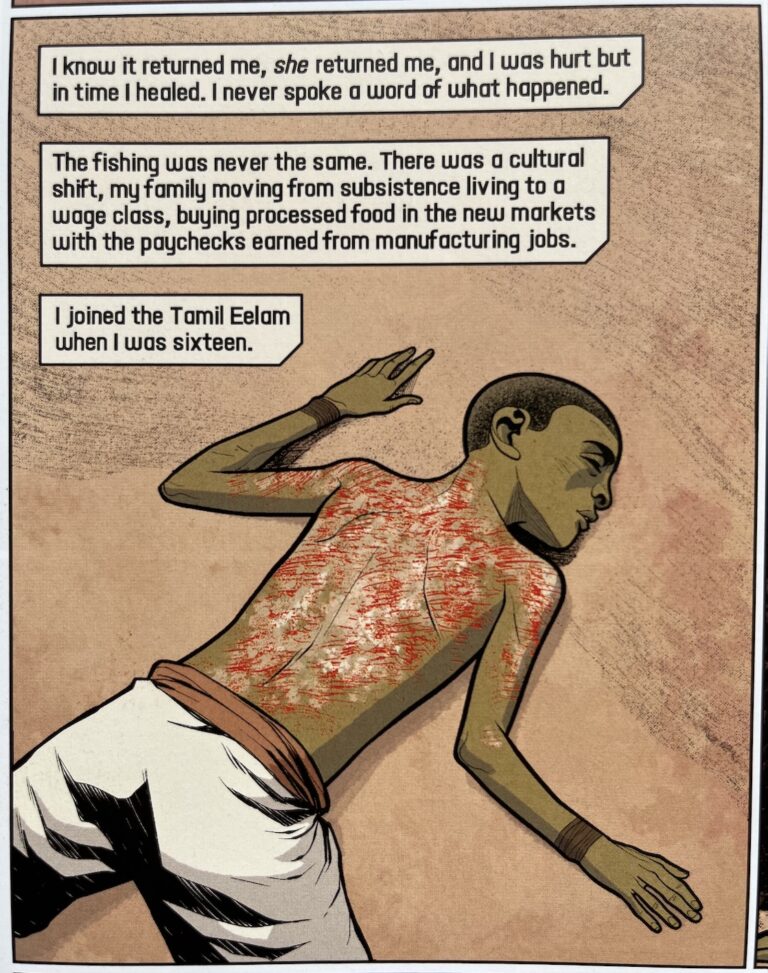
This profound socio-economic and cultural shift alienates Mag and his fellow villagers from the sea, and it also forces them to become actors within the capitalist world system. As such, they are also obliged to contribute to the slow erosion of planetary resources this system produces. It is either this or it is migration or starvation. Eventually, as peripheral actors within the system, they will face migration and starvation anyway.
The Massive is an interesting and unusual climate fiction from North America in that it is so keenly aware of how people in South and South East Asia (and in many other parts of what is often termed the Global South) have long experienced the slow violence produced by ecological breakdown. It is also interesting because it so clearly describes how the capitalist world-system has forced people in precarious parts of the world to abandon old and indigenous food systems. While such transformation has undoubtedly accelerated the effectiveness of this system to produce and spread food, it has assisted in the creation of unsustainable ecological and social relations.